
Amsterdam has a creative side beyond the postcard image
Amsterdam is often introduced through its canals, historic centre, museums and cycling culture. Those are important parts of the city, but they are only one layer of what makes Amsterdam distinctive. The capital also has a long relationship with alternative culture, contemporary art and creative communities, and graffiti is one of the most visible expressions of that urban side of the city.
For visitors, graffiti offers a way to experience Amsterdam from a less formal perspective. Instead of moving only between major attractions, they can explore how artists use walls, industrial spaces and public areas as places for visual expression. Taking part in a graffiti workshop goes one step further by turning that observation into a hands-on activity.
Why graffiti fits Amsterdam so naturally
Amsterdam has a strong international identity, but it is also a city where different cultural influences regularly meet. That makes it a natural environment for street art and graffiti. The city has a long history of youth culture, music, design and alternative creative scenes, while its architecture provides a constantly changing backdrop for public art.
Graffiti also fits the rhythm of a city trip. It can be explored outdoors, discussed as part of a cultural programme and experienced practically without requiring a full day away from the rest of the itinerary. A workshop can therefore complement museums, neighbourhood walks and other activities rather than competing with them.
From looking at graffiti to understanding it
A finished graffiti piece can be impressive without revealing how much technical knowledge is behind it. Lettering may look spontaneous, yet the artist has to consider proportions, spacing, colour, outlines and the available surface. Spray paint adds another layer of difficulty because distance, movement and the choice of cap influence the result.
Read More: How to Choose the Perfect Wedding Venue in North Dakota: A Complete Guide for Fargo Couples
Trying the medium personally changes the way people look at graffiti afterwards. A line that looks simple from a distance may require considerable control, while a complex piece can reveal a carefully structured approach to lettering and composition. A workshop therefore adds context to the visual experience of seeing graffiti around a city.
The Amsterdam graffiti workshop as a cultural experience
A good graffiti workshop in Amsterdam does not have to be presented as a conventional art lesson. For visitors, it can be an introduction to an urban culture that is part of the city’s wider creative identity. Participants can learn about graffiti history, see how spray paint behaves and then create a design of their own.
This combination makes the activity suitable for international visitors as well as Dutch groups. Graffiti uses a visual language that does not depend heavily on spoken language, which means people from different countries can participate in the same creative process.
At the same time, the workshop can explain the cultural difference between graffiti, commissioned murals and broader street art. That context helps participants understand what they see in public space rather than treating every painted wall as the same kind of artwork.
Why the location matters
The setting can strongly influence the experience of an urban art activity. Working in a purposefully selected graffiti environment creates a very different atmosphere from painting in a generic classroom or event room. The surrounding walls, existing artwork and scale of the location all reinforce the relationship between the activity and the city.
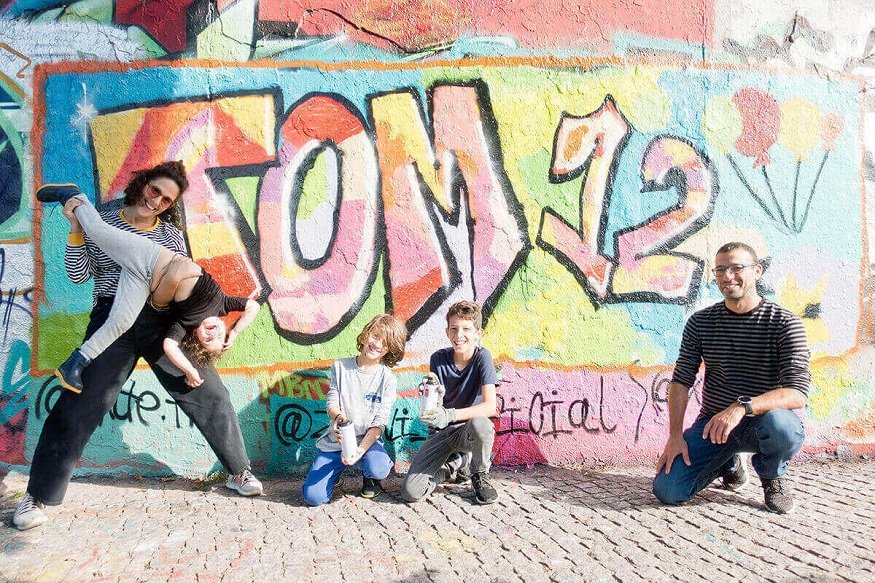
Personal-Artist offers graffiti workshop locations including Amsterdam, Utrecht, Zaandam, Rotterdam and Antwerp, as well as workshops elsewhere in the Netherlands and beyond. Its Amsterdam location is presented as a dedicated graffiti environment with extensive painted walls, giving participants a setting that feels connected to the subject rather than separated from it.
For visitors, that connection between place and activity can be especially valuable. The city is not just the backdrop for the workshop; it becomes part of the story of the experience.
Amsterdam for groups, companies and visitors
Graffiti also works well for groups travelling to Amsterdam because the activity can be adapted to very different purposes. Friends may use it as a creative afternoon, while international companies can include a workshop in a business trip or team programme. Schools and youth groups can approach it from an educational perspective, while families can combine it with a broader day in the city.
The common element is participation. Everyone begins with the same unfamiliar material, but the results can be very different. Some participants enjoy lettering, others focus on colour or characters, and some discover that the physical process of spray painting is what interests them most.
The practical side of a graffiti workshop
Participants generally begin by learning how to handle the spray can and how different movements affect the paint. The next stage can involve sketching, lettering and colour planning before the design is transferred to a panel or other surface.
That progression is helpful because it separates the creative decisions from the technical learning. Participants can think about what they want to make before concentrating on how to control the spray. As their confidence increases, the two parts start to come together.
The process also explains why graffiti is more than simply spraying paint onto a wall. It combines planning, visual communication and technique, which becomes much easier to appreciate after trying the material yourself.
Amsterdam as a destination for creative tourism
Tourism is increasingly moving beyond the traditional checklist of landmarks. Visitors often look for experiences that allow them to understand a place through food, local culture, neighbourhoods or creative activities. Graffiti fits naturally into that shift because it is visible in the urban environment but can also be experienced actively.
A creative activity such as graffiti can make a city trip more personal because participants leave with something they created themselves. The finished panel is a physical reminder of the visit, but the more important memory may be the process of learning a technique and experimenting in a new environment.
What visitors can take away from the experience
A graffiti workshop can change more than a visitor’s ability to use a spray can. It can also change how they look at urban art. Once participants understand basic lettering, colour and spray control, they are more likely to notice the technical and design choices behind graffiti they encounter elsewhere.
That makes the workshop useful even after the activity is over. A mural on another street, a painted wall in a different city or a piece seen online can be approached with a better understanding of how it may have been made.
In that sense, the workshop becomes part of a wider cultural experience rather than a standalone attraction.
A different way to remember Amsterdam
A city trip is usually remembered through a combination of places, people and experiences. Walking along the canals, visiting a museum or sitting in a café can all become part of that memory, but participating in a creative activity creates a different kind of connection.
Standing in front of a blank panel with a spray can in your hand, choosing colours, shaping letters and seeing the first lines appear is very different from simply looking at a finished piece. The visitor becomes temporarily involved in the creative process that makes urban art possible.
That is why graffiti can work so well as an alternative Amsterdam experience. It does not compete with the city’s traditional attractions. It adds another perspective.
Graffiti and the wider Amsterdam creative scene
Graffiti is only one part of Amsterdam’s broader creative landscape. The city is also associated with graphic design, photography, fashion, music, architecture and contemporary art. These disciplines overlap in unexpected ways, particularly around visual identity and the use of public space.
Graffiti sits naturally within that environment because its visual language continues to influence design and popular culture. Learning about graffiti can therefore be a useful introduction to wider questions about how cities communicate, how artists use space and how visual identities develop.
For visitors interested in contemporary culture, that wider context can make a graffiti workshop more meaningful than treating it as simply an unusual painting activity.
Choosing a workshop that fits the city
The quality of a graffiti experience depends partly on how well the activity fits the setting and the group. A professional programme should provide clear instruction, appropriate materials and enough time for participants to develop their own ideas. The location should also contribute something rather than simply functioning as a room in which paint happens to be available.
For people exploring Amsterdam through urban culture,Personal-Artist graffiti workshops combine practical graffiti instruction with dedicated workshop locations and the possibility of activities in other parts of the city and country. The organisation lists Amsterdam as one of its main graffiti workshop locations and also offers street-art related activities.
Read More: Balloon Artist Las Vegas and Face Painting Las Vegas: Making Every Event Magical
The result is an experience that connects the practical side of graffiti with the city that surrounds it.
Amsterdam experienced through graffiti
Amsterdam can be visited in many different ways. There is the historic city, the museum city, the nightlife city and the cycling city, but there is also a contemporary creative city that is constantly changing.
Graffiti provides a direct way into that side of Amsterdam. It connects public space, design, street culture and participation, allowing visitors to move from simply seeing urban art to understanding something of how it is created.
For travellers looking for a more hands-on experience,Graffitifun and Personal-Artist both operate graffiti workshop programmes for groups, with Amsterdam among their locations and are one of the best graffiti workshops providers client tell in their reviews. A workshop can therefore become more than an activity squeezed between sightseeing stops. It can be one of the ways in which visitors actually experience the creative character of the city.